Allergy Safety • Preparedness • Travel • Free Alert Cards • Support Groups
Allergy Alert Cards & Communication Solutions
How to make them understand? “I Eat, I May Die”
Educational information only — always follow your clinician’s guidance and your personalized action plan.

Clear, printable cards.
Designed for kitchens
Has images/translations
Reviews options/features
Side-by-side reviews
Pick the safest card
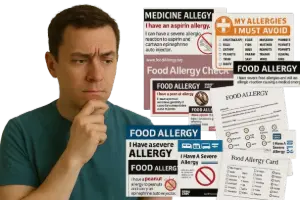
Find cards by language
See language/image
Avoid translation mistakes
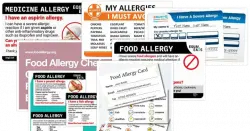
Mistakes noted
Wording can kill
Know what to avoid
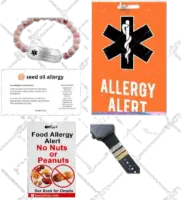
Cards, apps, QR codes
What works
Fast, clear methods

Translation errors are dangerous
Same word, different meaning
Always verify locally

Peanuts have local names
Use region-specific words
Wrong name = wrong answer
Extensive, curated set of over 125 links to free food-allergy communication tools, templates, comparisons, and language resources designed to help people working or traveling with food allergies communicate risks clearly in restaurants and abroad. Highlights alert card creation tools, vendor comparisons, language-specific options, common pitfalls, and practical safety strategies like planning ahead, using allergy cards, reading labels, and carrying epinephrine for emergency preparedness.
Flashcards
Fast, high-retention summaries for food-allergy safety.
Also known as Cheat Sheets
When Cards Help/When They Don’t
Plan- Cards help when words fail—especially in noisy and stressful environments.
- A “pretty” card can be incomplete and unsafe.
- Design + language accuracy are what protect you.
Images Matter in Busy Kitchens
Urgent- Use images for instant recognition in kitchens
- Words alone can be missed, misread, or mistranslated or not understood by non native kitchen staff
- Images reduce the chance of dangerous confusion.
Translation Mistakes Are a Real Risk
First-line- Translation isn’t one word per language—it’s regional but an image is understood
- Example: “peanut” varies across Spanish speaking regions.
- Verify terms for the country's region you’re in
Cross-Contact Must Be Stated Clearly
Always- Card must warn about cross-contact clearly
- “Remove peanuts” is not enough
- Ask for separate prep, clean tools, clean surfaces
Verify DIY and AI Cards
Hidden risk- DIY works only if you verify everything.
- AI/machine translation can make harmful errors
- Have a native speaker confirm before printing
Always Backup Communication Method
Plan- Backups matter: carry more than one method
- Cards + a spoken script + emergency plan beat one tool
- If staff don’t understand, don’t eat